Tell Your Story Daily Practice

tell-your-story daily practice

Identity vs Personality

We are born with our personality. It’s connected to the source of our spirit. Our personality is something that is not changed and is always present no matter how we identify ourselves.

Our identity is something we develop and can change. You can decide to be an acupuncturist or a musician. That’s your identity. It can change.

Take some time to think and write about your personality. also take time to write about your identity. It’s wonderful and healthy when your personality is able to shine through your identity. Sometimes we have developed identities that block the expression of our personality – this is draining on our qi and our health.

STEP 1. Write down everything about yourself as you know it at this very moment. Write down who you are, what you do and how you connect with the world around you in great detail.

STEP 2. Reach deep inside your soul, get creative and allow your dreams to emerge. Think about what you want to be and do and how you want to live your life.

TBC

What’s Your Story?

what's your story

How do you define yourself? Or do you let other people and the circumstances around you define who YOU are?

Feeling like you have very little control over your life will put you on a very anxious and uncertain path. Efforts to feel good, health-wise, will be better supported when your life is grounded in certainty – when life unfolds with smoothness and consistency but how?

Think about your life, your relationships, your work, and the activities you are involved in. How much control do you have? Do you feel like your true inner self is able to shine and freely express who you are or do you feel trapped into patterns controlled by outside circumstances?

I believe we are spiritual beings having a physical-human experience. Our spirit is connected to the source of all creation. We are capable of creating our own stories with the right mental focus.

It’s all about perspective shifts. Is the glass half empty? If yes, suddenly life is not so pleasant. Is the glass half full? If yes, suddenly things are looking up!

There’s no one to blame but only how you perceive things. It’s not the glasses fault that you see it as half empty or half full. Suddenly with this mindset you should realize you have control over how you perceive things.

You might say, the news drives you crazy or your neighbor drives you crazy, but are those circumstances controlling you or is it YOU allowing those circumstances to impact your life. Some things can’t be changed to our liking but we can let them go. We don’t have to let them take up space in our brains and drive us crazy.

YOU have control. YOU have creative power. YOU can tell your story.

So what about those problems that inevitably pop up throughout. How do we handle those surrounding circumstances? When you feel tension and are capture by struggles in life you need to have some tools to filter them out.

You need to develop an understanding of what you can change and what you can’t change. Some struggles in life are lessons we need to learn so we can grow and move to a higher level of being. Some struggles we will never change or control and need to let go so we can keep moving forward on our way that’s best for us.

Qi is energy and energy wants to flow. Good health requires sufficient qi that is free flowing and uninhibited. There are struggles in life that are like qi-vampires that suck the energy right out of us because we stay engaged in the struggle, we don’t learn any lessons that elevates our being and we falsely think we can change and control the circumstance…we need to let it go.

Forgiveness – the wrong idea about forgiving is thinking you must accept the wrong-doings that you believe others have made against you. Forgiveness is not about acceptance, it’s about letting go. If you continue to think about these struggles and tensions, you get stuck and again your qi is drained away diminishing your health and happiness.

Don’t let these outside circumstances inside you. You can stay centered and in control by making a conscious decision to let go and keep moving forward in a positive way. Your energy moves outward from the inside like a shinning star. Stay open and keep that flow going. Don’t let that negative energy from the outside penetrate your body. Don’t let it enter your heart and crush your spirit.

Again I ask, are those circumstances controlling you or is it YOU allowing those circumstances to impact your life. It’s a perspective-shift. You have control. You just have to decide how you want to look at it.

One thing is for sure, everything changes. We need to embrace change. As we go through life we develop tools to help us through the changes and struggles. An ending is also part of a cycle. Some transitions move us into new beginnings that require a different set of tools and thinking. The mindset needs to shift and change to adapt.

As a cycle ENDS and all appears to be doom and gloom – out of the ashes rises the fiery Phoenix – a new beginning. Like a caterpillar transforming into a butterfly, changes move us into something anew. Change is inevitable. Embrace it and thrive, be resistant to change and stay stuck and age rapidly as the vital life force is drained from your body by this tension and struggle.

Don’t let others tell your story. You take control of your story and you tell it in a way that supports positive growth and happiness for you. And as you fill your life up with happiness it will naturally overflow and spread into the world around you and into the hearts of others. This is the way of lovingkindness – a tenderness that naturally moves outward from the heart towards others.

Health in Posture

posture

Health in Posture

healthy ergonomics

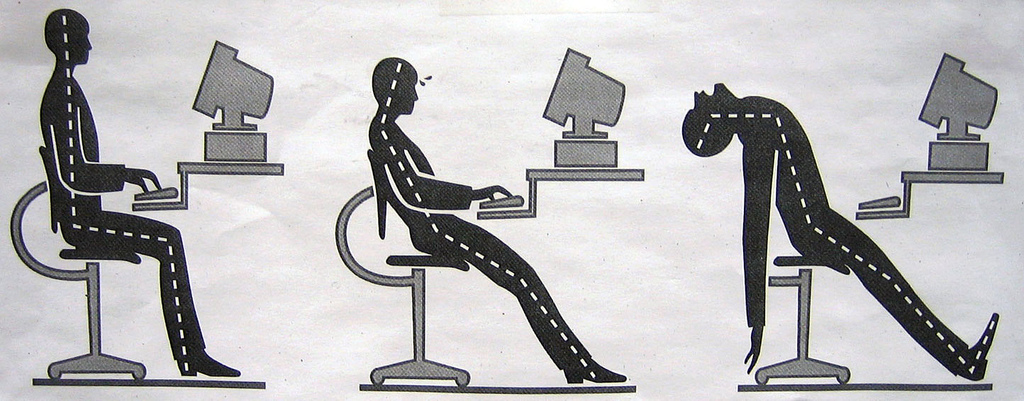
Remember how your mother always told you to sit up straight? Remember how you might have questioned why? As you may come to understand from this article maintaining good posture is good for your health. In oriental medicine there is an axiom that can be paraphrased as such: Where there is obstruction there is pain, where there is no pain there is no obstruction. The idea of smooth and unobstructed circulation is the underlying theme regarding good health. Poor posture can obstruct the circulatory aspects of many of our bodily functions such as respiration, blood circulation, bowl movement, digestion, urination, and even mental and emotional aspects can be impacted.

Pay attention to your posture and the posture of others around you. Notice how the shoulders of some folks aren’t level. Sometimes one shoulder can be higher than the other. Perhaps they do something repetitive with the lower shoulder such as carrying a bag. This uneven shift in weight could cause uneven wear and tear affecting other areas of the body such as the spine or hips. Ever notice how people walk? I’ve noticed that some people who are always in a hurry lean forward too much as if they were walking down hill. They are always on the balls of their feet. This posture places a lot of tension on the front part of the body. Further down the road of life if this posture becomes habitual these seemingly down-hill walkers may develop structural problems with certain parts of the body such as the knees. Sitting up straight takes pressure off the abdominal organs and allows the lungs to descend deeply taking in more oxygen. Oxygen is required to energize our body. Feelings of depression, stagnation and low energy can occur when we collapse our posture preventing us from inhaling deeply. A good posture is one that stands tall, straight, well rooted and balanced opening the spaces between heaven and earth.

How can I develop a tall, straight, well-rooted and balanced posture? I’m glad you asked this question! You have to first learn to recognize good posture and then unlearn all the bad postural habits by promoting your newly understood lessons on good posture. The following is a checklist that can help you develop an understanding of goof posture. By simply taking a minute to review this list on a daily basis you can transform bad habits into good ones regarding posture.

It helps to face a full-length mirror to observe your posture. Before you start have a friend take a picture of your current posture so you can compare as time goes on.

· Stand with your feet shoulders-width apart – your weight should be carried on the center of your feet. Not on the sides, not the heels nor the balls of the feet but at the center of the feet where the arch of the foot is prominent.
· Bend your knees slightly – let your thighs carry your weight. Locking the knees blocks circulation. Don’t lock your knees.
· Thrust your hips forward slightly – this will open and lessen the curve of the lumbar section of the spine so the large and strong thigh muscles carry more of the weight.
· Lengthen the abdominal region – don’t collapse your abdomen. This will also help length the lumbar section and allow the abdominal organs such as the Large Intestine and Small Intestine to expand and open.
· Relax your shoulders, arms are placed by your side – Shoulders tend to rise up especially from over tensing. Allow them to settle. Next time you drive your car be aware of how relaxed your shoulders are. Your shoulders don’t need to be raised to steer the wheel.
· Slightly open the Axilla (Armpits) – when relaxing the shoulders maintain a small space in the axilla as if gently holding an egg so as not to obstruct the major blood vessels and nerves called the Brachial Plexus passing through the axilla.
· Press the Heavens – lengthen your neck – with the shoulders relaxed push upward with the top of your head as if you were pressing against the ceiling or the heavens depending on how tall you feel you are on any given day. This move also helps to open and expand the abdomen. Your feet should feel rooted to the earth as the top of your head pressed upwards to the heavens and these two moves will open the abdominal cavity – a.k.a. – the space between heaven and earth.
· Breath deeply – on a deep breath your abdomen should expand outward on inhalation. This deep breathing will expand the lungs wide and deep which will gently press and massage the spin and all the surrounding tissues and organs including the Heart, Liver, kidneys, Spleen, Large Intestine and Small Intestine to name a few. Breathing is an important part not to be discarded because it can physically connect with other internal organs to promote smooth and unobstructed circulation.

You may find that by making these steps a daily practice your body begins to open and you may begin to experience new sensations such as feeling lighter, more balanced, more energetic and more agile. Observation and awareness can bring you a better quality of life especially when you can begin to understand how these matters can improve health and aid in the prevention of disease. Practice brings perfection. Wasn’t mother always right?

Simple Meditation for Stress 5 of 5

simple meditation 5

Let’s review some key points to form a simple meditation for stress relief that we covered over the past 4 articles.

  • Allow yourself to be still and quiet for about 5 minutes before beginning your meditative practice.
  • Beginners level – Your goal is to practice each component (body, mind and breath) individually in an effort to find a deeper sense of relaxation – this is called regulating body, mind and breath.
  • Advanced level – after feeling a deeper sense of relaxation with each component (body, mind and breath) you are ready to practice unifying them together
  • Practice daily – be consistent with your practice. Practice a little everyday instead of a whole bunch at once. Allow the practice to grow and become apart of your daily routines.
  • Let go – if at any time you feel uncomfortable you need to assess why and try to make adjustments. Sometimes trying too hard becomes frustrating – you need to let go and allow yourself time to build patience with your practice.
  • Your goal is to relax

Be gentle with yourself. Don’t force it. Allow your body to get use to the new sensations. When patients tell me they can’t relax I explain that they’ve master being busy and now they need to master being relaxed. It can take a bit of getting use to. Obviously if you are in pain or have a condition that prevents you from feeling comfortable you may need to seek more professional guidance. At the end of your practice your goal is to feel more relaxed than when you started. Observe how you feel before you start and after you finish. Make a mental note and compare to track how you’re progressing.

Having a practice to relieve stress is a fundamental need to support and maximize your health potential.

Simple Meditation for Stress 1 of 5

Simple Meditation for Stress 2 of 5

Simple Meditation for Stress 3 of 5

Simple Meditation for Stress 4 of 5

Simple Meditation for Stress 5 of 5


Simple Meditation for Stress 4 of 5

simple meditation 4

Continuing to explore a simple meditation for stress relief I’d like to make this practical so you can take this meditation with you instead of feeling you have to lock yourself away in a quiet room to practice. Each of the concepts of regulating and relaxing the mind, body and breath in the previous  3 articles can be practice on it’s own anywhere and at any time. If you’re in line at the bank – try it. If you’re stuck in traffic – try it. Check your body, mind and breath and identify any signs of tension and stress. Take a deep relaxing breath to open and relax the body. Make sure the breathing is deep and comfortable. Steady your mind in the center of your body.

Desire pulls your mind out of your center and up-roots you. Stay centered and rooted and don’t let any desires distract or pull you away. Be true to yourself – stay rooted, stay centered. Through stillness you allow the turbulent waters of your life to be still. In stillness as you gaze into the waters of your life your focus becomes clear. In stillness you see your true self.

Simple Meditation for Stress 1 of 5

Simple Meditation for Stress 2 of 5

Simple Meditation for Stress 3 of 5

Simple Meditation for Stress 4 of 5

Simple Meditation for Stress 5 of 5


Simple Meditation for Stress Relief 3 of 5

simple meditation 3

The past 2 related articles focused on finding a deep sense of relaxation by regulating the body and the breath. In this article “simple meditation for stress relief – 3 of 5” will focus on regulating the mind or mental focus. The mind is likened to an insubstantial, and highly active force directing our qi (vital life force / functional energy). Where your mind goes your qi will follow. Mental energy that is excessive under stress can be consuming. Emotions such as anxiety, worry or random, unorganized thinking can deplete your energy and over time adversely impact your body. If the body is yin-like than the mind is yang-like in yin yang theory and so balance between these two components are necessary. An analogy of boiling water is helpful in understanding this relationship. The mind is the fire under the pot and the body is the water in the pot. Under mental stress the mind (fire) is highly active and consuming to the body (water). When you turn up the fire more water is boiled away in the pot. You’re burning the candle at both ends to use another analogy. In this manner you get a bright light but not for long. Health and longevity of life depends on a balance of yang-fire and yin-water qualities in the body. Health and longevity comes from a slow steady boil. Regularity in life is key to health.

Just remember mental activity is consuming to the body. When meditating or practicing techniques of stress relief an important goal is to stop the overactive mind or at least slow it down. You need something to focus your mind. This overactive mind is called the monkey mind. To make the monkey focus and stop jumping around give the monkey a banana. What’s the banana? Something to focus your mind on. It could be a spot on the wall or ceiling to keep your mind steady. I suggest focusing on your breathing. Particularly the inhalation rooting your mental focus down to your energetic center called the dan tian. The dan tian is located about 1.5 inches below your naval and deep inside the body about mid-way between the front and back of your body. Give it a try.

After regulating the body by laying down for about 5 minutes and after practicing deep breathing comfortably as explained in the 2 previous articles lead your mind down to the dan tian on the next inhalation. When exhaling let the air out but keep your focus fixed low on the dan tian. The dan tian is the source of our energy. Focusing on the dan tian supports the source – a very grounding and relaxation sensation. This is the opposite to the rising energy of anxiety and stress that positions the mind high in the head where most of our senses are located – hearing, sight, taste, smell, feeling. As you try to sink the mind into the dan tian your mind will wander but when it does just place your mental focus back on your inhale following the air in through your nose and down in to your lower abdomen as your lungs expand. You want to use a lot of imagination and feel to create a strong mental image that is interesting to focus on. Imagine feeling every aspect of your body structure as you follow your inhalation downward. Try to extend your feelings deep into the body right down to the cellular level with great attention to detail in a comfortable, mentally steady and calm manner.

Remember when practicing if you feel uncomfortable just let go and stop controlling the meditation. Allow your self to relax and then slowly try again. If you are use to hyperactivity you will be alienated by the stillness in meditation. Be gentle with yourself and allow yourself to experience and become accustom to the stillness of meditation.

Check out the next article on Simple Meditation for Stress relief – 4 of 5

Simple Meditation for Stress 1 of 5

Simple Meditation for Stress 2 of 5

Simple Meditation for Stress 3 of 5

Simple Meditation for Stress 4 of 5

Simple Meditation for Stress 5 of 5


Simple Meditation for Stress 2 of 5

simple meditation 2

In the first article of this series called “Simple Meditation for Stress Relief – 1 of 5” we introduced the concept of regulating or controlling 3 components – body, breath and mind and explained a method to regulate the body. Regulating these components means to practice them until they become natural or until they occur habitually with the goal of finding a deep sense of relaxation for each individual component.

Once you feel comfortable regulating each component the next level of practice will be to unify them for a deeper benefit for your health in managing stress.

Regulating the body should be practiced on it’s own for 1 or 2 weeks or until you feel your body is able to relax within about 3 to 5 minutes.

Now let’s explore regulating the breathing. The effort in breathing comes from respiratory muscles contracting to pull open the lungs and fill with air. We want to do this with the least amount of effort to minimize tension and stress and promote comfort and relaxation. You need to understand normal abdominal breathing and water breathing. After you lay down for several to regulate and relax the body start focusing on deeper breathing without feeling uncomfortable.

When you inhale your abdomen should rise and when you exhale your abdomen will settle back down. This is called a water breath with the emphasis on the lower abdomen – think of this as a low region in the body where water (yin substances) can sink and settle.

Opposite to water breathing is fire breathing or sometimes called martial or military breathing. The chest expands with fire breathing. This requires more muscles and excites your energy. This is the kind of breathing that occurs naturally when you in a fight or confrontation. This causes energy to rise up like fire. Fire breathing is not useful when your goal is to relax so make sure you are practicing water breathing or normal abdominal breathing which that allows the abdomen to rise and fall in a comfortable manner.

When you accomplished regulating the body by laying down and feeling a deeper sense of relaxation after 3 – 5 minutes then start practicing normal abdominal breathing. Practice normal abdominal breathing for 10 to 20 minutes each day until you feel comfortable and more relaxed with the practice.

At first you may feel uncomfortable trying to control your breathing. Just let go and allow your breathing to be natural. Controlling your breathing could be a problem for some people and you may need more professional guidance in this portion of the exercise. When ever you feel uncomfortable you need to let go and stop trying to over-control the practice so that you feel comfortable and feel safe. This practice is a gentle practice that needs time to develop. It should not be forced or heavy-handed. Controlling your breath should be as light as a feather. Be gentle with yourself and you will go far.

Deep breathing can provide great benefits to your health. Next time you are stressed out try to pay attention to your breathing. You may notice that you hold your breath because you are dealing with so much stress that you can even take another breath in. Like a pressure cooker you are tensing up under stress and forcing energy to build up inside. You need to let it go before this pressure starts to damage your body internally.

Alternatively, the next time you wake up from a peaceful sleep and you are semi-conscious pay attention to your breathing. You may notice it to be deep and your abdomen is moving very naturally without even trying. This is water breathing that is naturally done at night to rejuvenate the body. Learn from this and integrate it into your practice. If you don’t experience waking up from a peaceful sleep then maybe you need help with sleep which is fundamental to optimal health. Give the clinic a call if you need help with sleep. Sleep is an important pillar of health. Without the support of good sleep the whole thing falls apart.

Simple Meditation for Stress 1 of 5

Simple Meditation for Stress 2 of 5

Simple Meditation for Stress 3 of 5

Simple Meditation for Stress 4 of 5

Simple Meditation for Stress 5 of 5


Simple Meditation for Stress Relief 1 of 5

simple meditation

Yin Yang theory defines balance as two equal but opposite forces coming together for harmony. This series is about finding balance when under stress. Stress is fire-like (yang) which is opposite to relaxation which is water-like (yin) and complementary. When there’s too much fire we need to cool it down with water – too much stress requires relaxation to restore balance. What are you doing to promote balance, relieve stress and maximize your health?

In this 5 part series I want to introduce some simple concepts of meditation based on qigong (energy-work). As a beginner there are 3 components you must unify and regulate or practice controlling:

  1. Body
  2. Breath
  3. Mind

Regulating these components means to practice them until they become natural or until they occur habitually with the goal of finding a deep sense of relaxation individually. As a second and deeper stage you will learn to unify these components. Like the yin yang symbol we want to bring these 3 components in harmony together so they don’t over-control each other to engender balance within the body for health.

There are many practices to explore in regulating each component so if you find one practice difficult don’t give up.  Keep searching for other forms to regulate these components until you find what works for you.

This article will focus on regulating the body. If you don’t have experience with meditation you may think that you have to sit with your legs crossed in what is called the lotus position to meditate. You don’t have to. There are goals for different postures that are beyond the scope of this article. The simple goal here is to find a deep sense of relaxation in the 3 individual components – body, breath and mind.

You need to feel comfortable and relaxed when meditating. Regulating the body is simple – find a posture that helps you feel completely relaxed. Some people have difficulty like pain and need to position their body in an unusual position for comfort which is ok as long as your breathing is not obstructed.

Laying down face-up is a good general posture to relax the body. You may want to tuck a pillow under your legs and head and grab a blanket to cover the body as long as it helps your body to relax. Placing the legs up higher than the torso allows excess blood to drain back towards the heart and lungs to be re-oxygenated and recirculated which can feel rejuvenating to the body. Practice relaxing and regulating the body for 10 to 20 minutes each day.

You know you are benefiting your health if you feel more relaxed at the end of the practice.

Check out this article on promoting good posture which relates to regulating the body particularly when standing – https://natureshealing.info/posture/

Simple Meditation for Stress 1 of 5

Simple Meditation for Stress 2 of 5

Simple Meditation for Stress 3 of 5

Simple Meditation for Stress 4 of 5

Simple Meditation for Stress 5 of 5

Optimal Health and Natural Healing Defined

optimal health and natural healing defined

How do you define optimal health and natural healing?

In modern times there’s more of a mindset to react to health issues instead of emphasizing prevention and natural healing. There are a lot of general health tips that won’t address some individual’s unique health imbalances. There’s a lot of talk about what to eat but most health issues are rooted in mental-emotional health. Many medications don’t support the body’s natural abilities to healing. Many medications for conditions like high blood pressure, diabetes, asthma, allergies or digestive issues force symptoms to subside but the underlying root-cause of these conditions are never truly identified or corrected.

The body has the ability to heal naturally. Think of the body like an assembly line. Every worker on that assembly line is important in helping the body to grow and function well. If one worker is not doing their job well the whole line slows down resulting in a lower level of production or body function. Often times, it’s not just one worker or one symptom that patients are experiencing but many. Many workers are not performing optimally.

Problems like constipation, diarrhea, bloating, nausea, low appetite show signs of poor digestive ability. Difficulty falling asleep, difficulty staying a sleep, restless sleep, sleep apnea, waking up to urinate at night, waking up tired and struggling to quiet the mind all can work against a good nights sleep. Such problems can cause the whole assembly line to weaken it’s productive output. Poor health results.

Diet is a large focus for prevention but there’s too much of a focus on counting calories and weight management. Eating whole foods that are nutrient-dense in the proper proportions will not only help manage weight but give the body the nutrients it really needs for optimal health and natural healing. Many packaged and processed foods like pasta, bread and cereals are depleted of nutrients and need to be fortified with vitamins. And then you have to question the quality of these so called fortified foods, right?

Knowing what to look for in your personal health is important to stay on a healthy track and support your body’s natural healing abilities. This is what I love about Traditional Chinese Medicine (TCM). I found TCM was able to address my own personal health issues. TCM has helped me define optimal health and natural healing not only for my patients but for my family as well. Acupuncture, Chinese herbal medicine, tai chi, chi kung, massage techniques, aspects of lifestyle and diet offer greater practices in prevention and have all been apart of my families plans for optimal health and natural healing.

Here’s an example of a different dietary practice to identify imbalances and offer corrections for better health based on TCM. A patient walks into the clinic… (this is not a joke :). I do an extensive health history and evaluation. The patient is presenting with excess heat signs and dampness.

I need to explain these TCM diagnostic terms. Diagnosing in TCM is like identifying weather patterns – hot , cold, damp, dry, windy and so on. I know it sounds funny but this is natural medicine for natural healing.

The body is a part of nature and reacts the same way. Cold causes the body to contract, heat causes the body to expand. Dampness can be equated to inflammation in the body, dryness can be experienced in different ways for example, dry skin, dry mouth, dry eyes. A windy condition is a condition to define signs and symptoms that come and go or move around the body in irregular patterns like headaches or patterns of pain that appear in different locations. Good health is about good circulation. All of these conditions can lead to circulatory stagnation and poor body function.

Now if you have been following my diatribe you should be asking, “so what dietary changes could be suggested for excess heat and dampness”? Hey, good question! Excess heat needs to be addressed with cooling foods. More often then not, this means veggies. Diabetes is a condition that can be described as excess damp-heat. Diabetics will feel warmer and may even complain of dry mouth symptoms. Sugar is a major cause of dampness in TCM. It thickens the body fluids and can lead to excess phlegm and mucus which can stagnate circulation and degrade body function. So the dietary plan is to increase veggies and lower the carbs. This suggestion may sound familiar because so many people struggle with this common TCM diagnosis – excess heat and dampness. If there’s weight gain there’s dampness and probably excess heat causing irregularities in body function and impeding healing.

Much of the preventive talk today focuses on eating but most health issues are rooted in mental-emotional imbalances. Thinking and feeling requires energy. So if you think too much you probably will gain weight. Ruminating, worry, over-thinking, pensiveness and also feelings of anxiousness and nervousness are in this same category. The inability to shut the mind off will often lead to poor sleep and over eating.

Thinking requires lighter foods like veggies opposed to heavy carbs like pasta or other starchy foods. Meditative practice and relaxation techniques found in Tai Chi and Chi Kung (Qigong) help organize and calm mental activity which can lead to better weight management.

This is optimal health and natural healing.

Best wishes in health!

Dr Chris

Longevity – Living Long and Healthy

longevity

Since ancient times, people have strove for longevity – to live a long and healthy life. Do you have a plan? Do you have tools or principles that you practice to optimize your health? How are they working for you? Can you evaluate your lifestyle in detail so you can make the best choices possible to promote health and longevity?

Personal health can differ naturally based on genetics and lifestyle. Each person has their unique benefits and challenges. Genetics can be hard to change but regulating your lifestyle is the area we can all focus on to optimize health.

If I told you there are time-tested ways to balance your lifestyle for greater health wouldn’t you want to know about them? If you were shown a path that you could take towards optimizing your health wouldn’t you take it? Feeling your best allows you to more fully participate in life and be more present for those you care about most. If you agree, health is your most important asset, would it be worth learning practical methods to cultivate and nurture your health to its fullest potential?

There is a lot of information on general health tips for the average person. The principles of natural healing I would like to share offers a higher level of awareness and prevention for each individual’s specific health needs. This is not about perfection but just more specific practices in awareness and prevention for your individual health needs.

Awareness is the first step. Observing your daily lifestyle, knowing your weaknesses and strengthens, knowing your limits, knowing what you can and can’t change and understanding factors that can strengthen or weaken your health over time are practices in awareness and self-care that you can develop. Learning time-tested principles to help you develop a deep sense of awareness and understanding can put YOU in charge of your health.

Prevention is the second step. It’s better to be proactive instead of reactionary. Putting practices of prevention into action is a proactive measure that can keep you on a better path towards greater health. Here’s a known truth – an ounce of prevention is worth a pound of cure.

Instead of the reactive attitude of “not fixing it until it breaks” how about a proactive effort of prevention before it happens? Knowing there’s a drug store around the corner or a doctor down the street, I believe, gives us a false sense of security.

Taking actions in prevention is not only being responsible but it offers the best plan for a long and healthy life.

Adults teaching their children awareness and best practices in prevention can extend the health benefits from one generation to the next. Here’s another known truth I will paraphrase – give a fish and eat for a day, teach how to fish and eat for a lifetime.

Teaching children about awareness and prevention can set them up for a lifetime of success when it comes to making better lifestyle choices to optimize their individual health needs. Greater health embodied in the essence inherited by children from healthy parents can be realized when parents make better lifestyle choices through awareness and prevention.

The modern lifestyle filled with modern conveniences weakens our natural abilities to thrive and adapt. Eating ready-made, processed, prepared foods instead of preparing them yourself is an example of modern convenience that can weaken health. Sugar in ancient times was rare to find. Much effort and many calories were burned to hunt down sugar. Today we just drive up to the Dunkin Donuts window and order – easy peasy!

Exercise is a modern necessity to strengthen a body that is weakened by easy living such as less walking or less physical activity. Patience is a virtue and almost extinct with the modern focus on instant gratification. Learning to be patient is helpful, healthy and crosses into the realm of higher thinking, contemplation and spirituality.

Traditional practices of meditation or the slow movements of Tai Chi have benefits beyond the obvious and can be very supportive. Developing practices in awareness and prevention beyond the obvious can improve your efforts towards greater health.

Relying on government and corporations to supply us with healthy choices has proven to be flawed over the years. How many times have you heard scientific advice changed on which part of the egg is healthy? The FDA finally ruled recently that trans-fat are bad and they’re giving food makers two more years before they are mandated to remove all trans-fats from their products. Does that make you feel like they are looking out for you? Just when you think all is well in the kingdom, look out! Because now I’m wondering what toxic junk they will use to replace trans-fats?

When it comes to food my advice is to commit to educating yourself on this most important and necessary resource to ensure optimal health.

The higher principles of awareness and prevention I’m expressing in this article are not sourced from conventional medical practices or modern pseudo-science. I want to convey the time-tested, natural principles of Traditional Chinese Medicine and the healing arts of Acupuncture, Tai Chi and Chi Kung. You don’t have to be an acupuncturist or a Tai Chi master to practices these principles. You just need to be aware of these natural principles and put them into practice for yourself. Natural principles have a truth that is effective and just makes good sense. Put your mind to learning them and see for yourself.

I will be posting a collection of articles over the coming weeks called – “Diagnose Yourself Naturally”. Look for articles on longevity, awareness and prevention and share with your friends and family. There are all-natural solutions to help you be the best you can be in health and spirit.

Defining terms of Self-Cultivation:

Self-Cultivation: Identifying your unique gifts and purpose. Taking personal responsibility. Being proactive in matters that support your health and well-being. Pursuing higher thinking and spiritual growth. Outwardly vibrating a natural, infectious and positive Qi.

Cultivating Awareness: developing a deeper sense of yourself and your surroundings.

Longevity: an ideal goal of living a long and healthy life .

Qi: vital life force, energy, providing flow and function.