

6 Ways to Maximize Digestive Health

Maximize Digestive Health – All Natural Solutions for Health and Healing

There’s much talk about eating more natural whole foods that are nutrient-dense but your ability to digest and break down foods to absorb the necessary nutrients is even more important.

Ask your self these questions…

  • As you get older have you notice you can’t eat the way you did when you were younger?
  • Have you learned to avoid certain foods that give you digestive trouble?
  • Do you experience any of the following: tiredness after eating, bloating, belching, diarrhea, heartburn, gas, constipation?

If you answer yes to any of these questions you probably have weak digestion which will effect your overall health. Maximizing digestion will not only help you feel better but it can put you on a more supportive path to greater wellness and for other health issues you are struggling with – this is about true prevention and health care.

Many chronic issues such as skin problems, chronic pain, asthma and allergies, to name a few, show improvement when an emphasis is placed on maximizing digestion.

Here are 6 important health tips to support your digestion

#1 Consciously Chew Your Food Until You Can Drink It / Mix Well With Saliva

Instead of shoving it down and moving on, try slowing down and being more conscious about eating. Chewing more takes the burden off of the rest of the digestive process making it easier for the food mass to pass through the stomach and intestines. Chew your food until it turns to liquid before swallowing. Saliva contains amylase, a digestive enzyme that begins carbohydrate digestion. Also mixing your food well with saliva helps to lubricate the food mass helping it to slide along better. Drinking liquids to wash your food down is not recommended. You can dilute your stomach acids and weaken your digestive efforts.

#2 Manage Your Stress Levels!

Your body has basically 2 modes of operation – activity vs rest. Digestion and sleep are handled by the rest and rejuvenate (parasympathetic) mode. Activity (STRESS!) engages the active fight-or-flight (sympathetic ) mode. Resources and energy move outward to the extremities and muscles when active and move inward when resting – i.e. sleeping and eating. When you’re stressed or working while eating your digestion will slow down and become sluggish because your digestion doesn’t have your full attention. Take time to relax. Enjoy eating and reduce the stress for better digestion.

Ask about lessons in Tai Chi, Chi Kung or learn meditation or some simple stress management techniques to relieve stress.

Many people find the Mini Stress Reduction Treatment offered here at the clinic for only $20 very helpful.

#3 Eat More Vegetables / Fiber

Many processed foods and highly refined carbohydrates like bread and pasta don’t typically contain fiber. I know what you’re thinking, you’re going to say, “but Dr. Chris, I eat a whole-wheat brand” – and I would reply by saying, “these foods are unhealthy in other ways – they are high calorie foods that easily break down into lots of sugar and tend to have the nutrients beaten out of them as they are overly processed. Fiber-rich foods tend to be whole foods that you’ll find in the fresh produce isle of your super market. 25-35 grams of fiber is recommended daily. So make sure you get enough fiber in your diet.

Here’s a great web page on fiber that might be helpful – http://www.lisanelsonrd.com/what-equals-25-35-grams-of-dietary-fiber/.

#4 Stay Hydrated

Drinking water supports movement and regularity in the digestive tract. Approximately 10 liters or 2.64 gallons of fluids and digestive juices enter the intestines each day. Keeping the body sufficiently hydrated supports the production of these important digestive fluids which in turn keeps things properly flowing through the digestive tract.

#5 Take Supportive Supplements to Maximize Digestion

Consider making an appointment to review your diet and digestion to see if there are some whole-food supplements that can benefit your digestion and better support your health concerns. There are specific all-natural supplements that offer digestive support containing digestive enzymes, probiotics, prebiotics, acidifying factors and bile thinning factors to sure up a weak digestion. Call the office today and ask for a whole food supplement consultation on digestive health – call 401-219-6446 and ask for Dr. Chris, D. Ac..

Check out the 21 Day Purification Program – an all-natural whole-food & supplement based approach to cleansing the body and optimizing health.

#6 Get Regular Exercise

Good health is about good circulation. Food needs to flow with regularity through the digestive tract. Exercise helps promote good circulation and also helps reduce the constricting effects of stress. Every cell in the body eats and makes waste. The body gets cranky when the whole process gets backed up. A body in motion stays in motion. Regular exercise burns calories and keeps the body’s blood and Qi (vital-functional-energy) flowing.

Bon Appétit!

Powerful Digestion with Fermented Veggies

Have you tried fermented veggies for digestive health?

Being focused on what to eat is important but if you can’t digest food well it doesn’t matter. Maintaining good digestive health is important but how? A traditional diet practice for maintaining good digestive health is to eat fermented veggies. There are, culturally, a wide range of fermented foods such as yogurt, kimchi, sauerkraut, kombucha, miso and more – checkout this list here.

I want to emphasis fermented veggies over probiotic supplements in this article because it is the triple threat to improve digestion and ward off uninvited ailments from entering through the digestive tract – something most probiotic supplements can’t provide. Here’s why:

  1. Health-Benefiting Bacteria (good gut bugs)- Fermentation promotes the growth of naturally occurring and beneficial bacteria living particularly in our large intestine also know as probiotics.
  2. Beneficial Bacteria Feeds on Fiber – fibrous foods like vegetables provide the food for the probiotics to thrive. Probiotic supplements aren’t typically packaged with fibrous food.
  3. Acidifies the Gut – beneficial bacteria breaks down fibrous vegetables and produces an acidic byproduct giving the fermented vegetable a sour taste

It’s important to note that fermented vegetables supports digestion by acidify the digestive tract.

There are 2 benefits of an acidic digestive tract

  1. Acid breaks down or digest food for better absorption – this is why being on ante-acids for too long is only preventing good digestion not helping.
    1. signs of bad digestion include – bloating, rumbling sounds and gas.
  2. An acidic environment kills off bad gut bugs (bacteria, fungus, parasites) – an acidic digestive tract an inhospitable environment for bad gut bugs and limits their ability to thrive but the good gut bugs loves an acidic environment – this is the important and beneficial symbiotic relationship between the good bacteria and our health.

Some people have trouble eating fibrous foods but there are other health issues going on that is beyond the scope of this article.

In the next article I’ll show you a simple way to make fermented veggies and how to eat them – if you’ve never experienced fermented veggies you’ll be surprise on how they taste and how easy they are to prepare.

Bon appetite!

How to Ferment Veggies – Natural Probiotics

Here’s how to ferment veggies for optimal digestion and immune health.

If you missed the first article on fermented veggies begin by reading this Fermented Veggies for Digestive Health.

Fermentation is a simple and inexpensive way to optimize your health by promoting probiotics in your gut the old fashion way. In the old days, before refrigeration, canning or toxic chemical preservatives, people preserved their foods by fermentation. Microorganisms like bacteria or yeast are used to culture foods producing a lactic acid fermentation. It offers a wonderful tart flavor that I like to add into salads and stir-fry dishes.

Many people, especially children, have weak digestion and immune function because of the overuse of antibiotics that not only wipes out bad bugs but also destroys the beneficial gut flora. Eating ferments can help restore these probiotics naturally.

This article is only 1 recipe but I encourage you to search the web for ferments and other recipes for cultured foods that you can experiment with and enjoy for optimal health.

In this article I want to layout a very simple method for fermented carrots.

Items to Ferment Veggies

(30 minutes preparation time, 3-7 days fermenting time)

Ingredients:

  • 9 large carrots (or about 5-6 cups of grated carrots)
  • 1 tbsp sea salt
  • 1/2 cup of spring water
  • olive oil or coconut oil
  • optional tbsp of freshly grated ginger

Also needed:

  • large bowl
  • food processor or blender – anything that can produce a little more juice
  • 2 small wide mouth glass mason jars with lids
  • grater

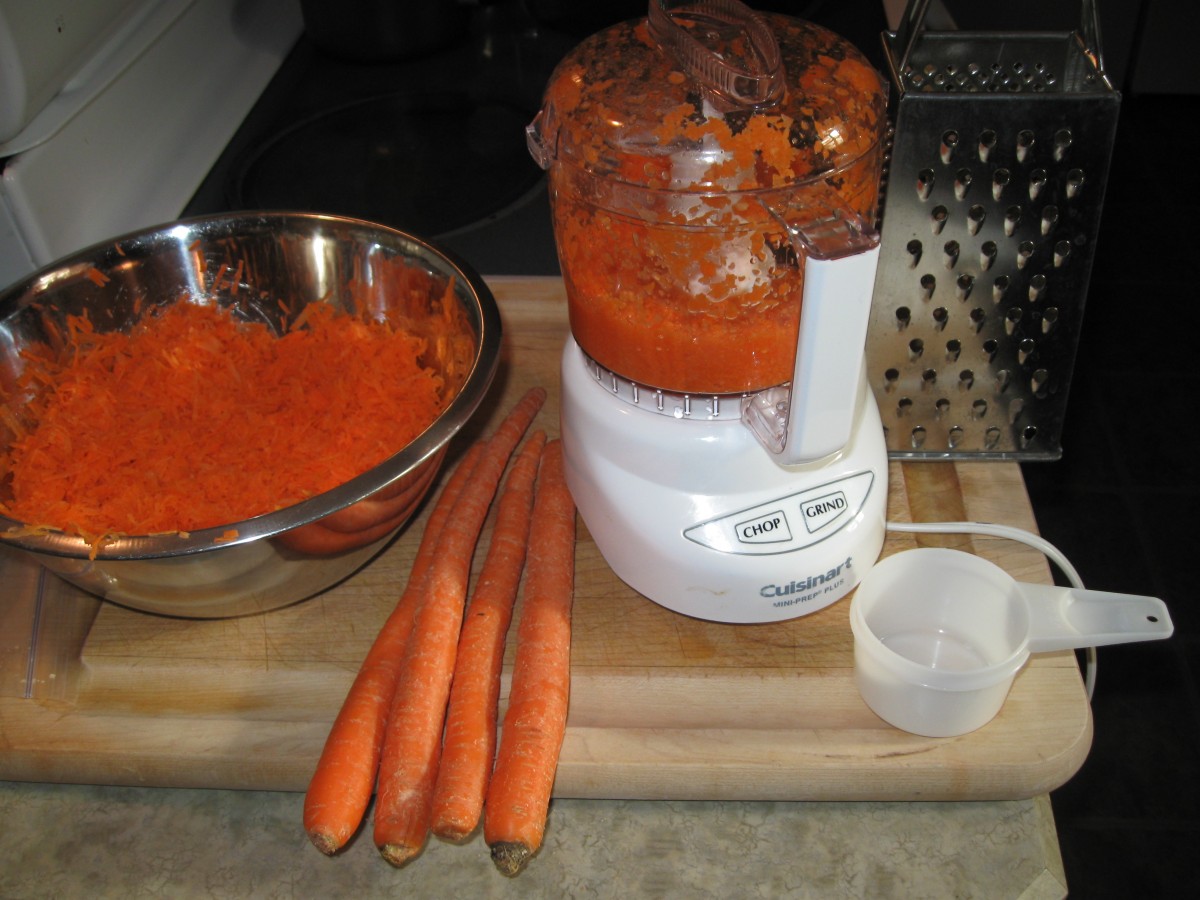
Step1. grate 6 large carrots (quantity can vary but this worked for me)

  • Using a grater with large holes is helpful. You don’t want grate the carrots too small – I find the texture too mushy for my pallet.

Step 2. Place shredded carrots in a bowl (along with the grated ginger if you choose this option) – sprinkle sea salt over the top and toss.

  • let it sit for about 20 – 30 minutes – through the process of osmosis the salt will leach out the moisture in the carrots and create a slightly salty brine mix.

Step 3. chop the 2 remaining carrots into large pieces to fit into a food processor or blender (what ever you have) and shred it up along with the 1/2 cup of spring water

  • 2 important reasons for this step – 1. this will give us extra liquid – the carrots need to sit under the liquid for proper anaerobic fermentation. 2. breaking down the cellular walls of this veggie will help release the natural lactobacilli microorganisms to get this culture started naturally.

Step 4. Squeeze the carrot and sea salt mix by hand – this will help release the needed juice

Step 5. Pour the carrot and spring water mix into the bowl with the carrots and sea salt and mix together

Step 6. Stuff the mason jars about 3/4 full.

  • Smash down the carrot shreds firmly with a fork and make sure they sit about 1 inch below the water line.

Step 7. Let the jars sit in a dark place in your home out of the sun. After 3 – 7 days transfer them to your refrigerator.

  • Warmer temperatures in your home means a faster fermentation process.
  • You can judge on how long you want it to ferment by taste – try a little each day to taste the level of acidity.

Done!

I keep the lid loose on the jar. The salt helps prevent growth of bad bacteria or fungus on the surface that is exposed to the air. This is also why it’s important to keep the veggies below the water line. Check out my trick below but note that some people don’t use oil or any weight on top and simply push the carrots down once each day with a fork.

2-fermented-veggies-mason-jars

Here’s a trick: I like to pour a thin layer of coconut oil or olive oil over the top of the veggies in the jar to provide a gentle seal. This sort of acts as a barrier on the surface between the air and the ingredients below the waterline. The coconut oil will need to be melted to pour. It will turn solid at room temperature and can be lifted when ready to eat. The olive oil can be mixed right in when ready to eat.

Give it a try!

Bon appetite!

Digestive Bloating – 3 Reasons and Solutions

Got Digestive Bloating? Wondering Why and What To Do?

Digestion is a major pillar of health. Poor digestion and lacking the ability to absorb necessary nutrients is a beginning to all sorts of health issues. Poor digestion can lead to aches and pains, digestive discomfort (digestive bloating), low energy, restless sleep, acid reflux and so much more. It needs to be recognized and managed. Treatment for chronic health issues often fails when neglecting the health of digestive function.

Here are 3 reasons you may experience digestive bloating

Overeating

If your portion sizes are too big, you’ll run out of digestive juices to properly break down your food. How will you know? You’ll feel full, you can experience digestive bloating and the big one is that you often feel tired after you eat.

What to do? Cut your portion sizes down. Try eating out of a smaller plate. Also certain food combinations can be to heavy for you to digest. The traditional combination of animal proteins and starches are a heavy, high caloric meal that can weigh you down, make you feel tired and not to mention lead to unwanted weight gain.

If you need help identifying better food combination for your specific lifestyle and health needs consider calling my office and doing a Traditional Chinese Medical Diet consultation. We’ll get a diet plan that works for you – no problem.

Food Sensitivities

You may notice certain foods are not agreeable. They may taste great but they just don’t sit well. You may have a sensitivity to specific foods. The body has developed an immune reaction to these foods. You may notice it as a digestive discomfort (digestive bloating, heart burn, cramping, gas etc..) but there may be other signs and symptoms that are not gut-related like achy joints, headaches, low energy, restless sleep and so on.

You can take a guess and try eliminating foods for a few weeks but you may not discover all the specific foods your body has developed a sensitivity towards. If you accidentally continue to expose your body to a sneaky hidden food, like eggs or gluten (something that seems to be in everything) you may continue to reactivate your sensitivity and nothing will improve.

My first suggestion is to try the FIT test – Food Inflammation Testing. This is a simple test I do right in my office that can identify sensitivities to over 100 different food items.

The therapy would include eliminating such foods once identified. There may also be a need for digestive aids to increase digestive function through this elimination period to optimize your recovery. You’ll experience greater health once you get back to your natural ability to absorb those all important nutrients by naturally improving your digestive abilities. It’s pretty straight forward and you don’t have to worry about harmful medications and debilitating side effects.

Weak Digestive Function

The 3rd reason for digestive bloating can be from weak digestive function. There’s a lot to cover here but I’ll list some important highlights that need to be identified to fully support digestion. Good digestion requires the following:

  1. sufficient stomach acid for proper digestion (if you feel bloating and gassy the food is not being broken down properly and its rotting inside you – not good!)
    • proton pump inhibitors need to go!
  2. a health mucus lining in the stomach – helps prevent burning sensations
  3. sufficient production of enzymes to help digestive food
  4. sufficient flow and production of bile from the liver and gall bladder to help digest fats (having trouble eating fatty foods?)
  5. elimination of harmful mucus and inflammation in the digestive tract that prevents proper nutrient absorption
  6. sufficient probiotics – those health gut bugs
  7. a healthy acid environment in the digestive tract to kill off harmful invading germs, fungus and parasites
  8. steady mental-emotional balance / stress management practices – emotions greatly effect how our digestive system functions – (fibromyalgia, IBS, Crohns, heart burn, nausea – many of these conditions and symptoms have an emotional component to them that needs to be considered)

Consider eating fermented veggies to improve your gut health and optimize digestion. Its natural and simple to do.

Poor Digestion

Poor digestion could cause a feeling of discomfort in your belly such as bloating, burning, gas, nausea, gurgling in the belly, fatigue, irregular or uncomfortable bowel movements. Bad input means bad output (body function) and could be the beginning of all sorts of health issues

What if I told you that poor digestion may not cause discomfort in your abdomen but there could be other health issues that could be caused or worsened by poor digestion such as…

Osteoporosis, hormone regularity, migraine headaches, chronic fatigue, chronic pain, mood swings, anxiety, depression, allergies…

Seems crazy right? Check this out.

Minerals like calcium for good bone health or iron to build blood are hard to digest. Think of minerals like rocks and metals. How hard do you think they are to melt down and absorb into your body? Pretty hard I’d say so that’s why healthy acid production in the stomach is important to digest and absorb minerals.

Bone loss – a condition known as osteoporosis, may be supported by supplementing with calcium but sometimes it’s not enough. What if poor digestion prevents you from absorbing enough calcium to support bone health?

Here’s another point… undigested fats sticking around in the intestines can block absorption of nutrients. Some important vitamins and minerals are fat soluble meaning they need fats in order to be properly transported through the body and put into use.

This is why good liver function and its ability to produce bile is necessary to properly break down and use fats.

And what if you could make big changes in your health by becoming a master at digesting your food?

Digestion is a complex process. And the digestive process is only a beginning.

A ball of chewed food gets dumped into the stomach. Food has to be melted down into liquid so that the little tiny hairs in the small bowel are able to suck in the nutrients from the food.

MOTHER WAS RIGHT…CHEW your food well!

The stomach squirts out digestive juices (stomach acid and enzymes) to help melt this ball of food into liquid. These liquefied nutrients are then sent directly to the liver before being sent out to feed the rest of the body.

So getting the food down into the stomach is only a beginning. All that nutrition has to be filtered and broken down even more by the liver before the rest of the body ever gets fed.

The liver cleans out chemicals and toxins and creates a bile that is squirted into the small bowel to help break down and absorb fat. Every cell in the body needs fat.

This is so key – remember this: Good health is all about good circulation. Every cell in the body needs to be fed to job it’s job well. This digestive process has to flow all the way down to each individual cell in the body so that you function well and feel your best.

Poor digestion can mean poor health.

If you struggle with chronic health problems optimizing your digestion could improve your health and perhaps even resolve the problem completely.

If you want to feel your best naturally, with loads of energy and vitality make sure you take care of your digestive system!

Mental Chatter and Obsessive Eating

What do I mean by mental chatter and obsessive eating? Your mind is always racing. You feel busy in your head with all that mental chatter. Your head is full of lots of thoughts swirling around. There are so many things to do but so little time. You’re so busy constantly brainstorming and planning. You’re admired for your multitasking skills with so many projects and tasks to consider but you’re health is falling apart. Your eating habits become influenced by this mental chatter. You’re gaining weight and wonder why?

If this sounds familiar I’d like to offer a simple suggestion to be aware of and consider changing. Thinking requires energy and one source of energy comes from the very foods we need to eat to support and maintain body function. Change your thinking and your body will follow.

Stress is a killer nowadays. Modern stress is usually refers to mental pressure. Years ago people were more physically active and the traditional diet was loaded with calories to support that sort of physical output of energy. Today people are mostly sitting behind computers, TV’s, and sitting while driving in a car. Such inactivity physically not only requires less carbs but it also conversely allows us to get busy thinking more which can be problematic as well. Excess thinking requires excess fuel – you want to eat more. Thinking requires a lighter fuel than lots of physical activity. Eating smaller meals more frequently would be more supportive. Instead of heavy, starchy foods and sugars that pack a lot of calories, try eating more fruits and veggies. It’s the same familiar recommendation but with an increased awareness as to why. A busy mind with less physical activity requires a low carb diet – plain and simple.

Next time, when you are mentally very busy, notice how you interact with food. Do you find yourself starving and unable to control yourself? Do you reach for anything, no matter how processed and bad it is, just to satisfy the urge? Also notice how hungry you are when you are more relaxed and comfortable with less mental chatter. I’m not talking about the couch potato syndrome of mindlessly eating and watching TV for hours on end. This is a talk about mindfulness – being mindful. It’s about feeling comfortable with less mental chatter and a more comfortable lifestyle pace in work and in our daily activities instead of gravitating towards frantic, disorganized thoughts to drag us through the hyperactive, daily grind.

Also consider what you can do to organize your thinking so it’s not so unproductive and draining. In Traditional Chinese Medicine it is said that worry, obsessive thinking and ruminating weakens the digestive process. All things have a cycle – from start to completion and around again. Worry or ruminating thoughts are endless with no satisfying sense of completion. This leads to unfinished and unsettling feelings like anxiety. No cycle is completed. There’s no sense of fulfillment only endless worry that leaves us feeling drained and empty inside. Motivation is depleted and unsettling emotions like anxiety or sinking depression seeps in.

Ancient practices in meditation, Tai Chi (Taijiquan) and Chi Kung (Qigong) have shown to be beneficial to health for many reasons but I’ll point out one – mindfulness. Be mindful of what you are thinking. Sometimes you need to stop or slow your thinking down so you feel more comfortable inside. Be aware of how you feel when you are relaxed and compare it to how you feel when you are busy and amped up inside which requires more energy. With so many raging thoughts it’s difficult to focus. Distraction becomes the norm.

Try this simple exercise – focus your mind on your breathing. When you’re relaxed notice how your breathing is deeper and more comfortable. When you’re stressed with lots of mental chatter notice how your breathing becomes perhaps tight, more constricted and uncomfortable. Look for comfort in slow, deep breathing. Next time your mind is racing and you feel uncomfortable refocus your mind on your breathing to slow the thinking down. Try to breathe about 20% to 30% more deeply with ease and comfort. Some people have difficulty trying to control their breathing. When this happens just let go – don’t try to control it. Be gentle and work on it slowly over time. Just sitting and focusing your mind on 1 thing can slow down the mental chatter to realize a calmer state of well-being for yourself and others around you. The frequency of how you vibrate affects the vibrational frequency of others around you. With the upcoming holiday season upon us we all sure need to feel that good, warm, calming vibration.